What is a moon bear? Facts, habitat and rescue
Moon bears, also known as Asiatic black bears, are a vulnerable species, distinguished by the white or yellow crescent mark on their chest. They play a vital role in Asia’s forest ecosystems, however their population is declining. Facing threats from habitat loss and the cruel bear bile farming industry across Asia, including Vietnam, South Korea and Laos, dedicated rescue efforts and sanctuaries are providing a lifeline for their rehabilitation and long-term survival.
What is a moon bear?
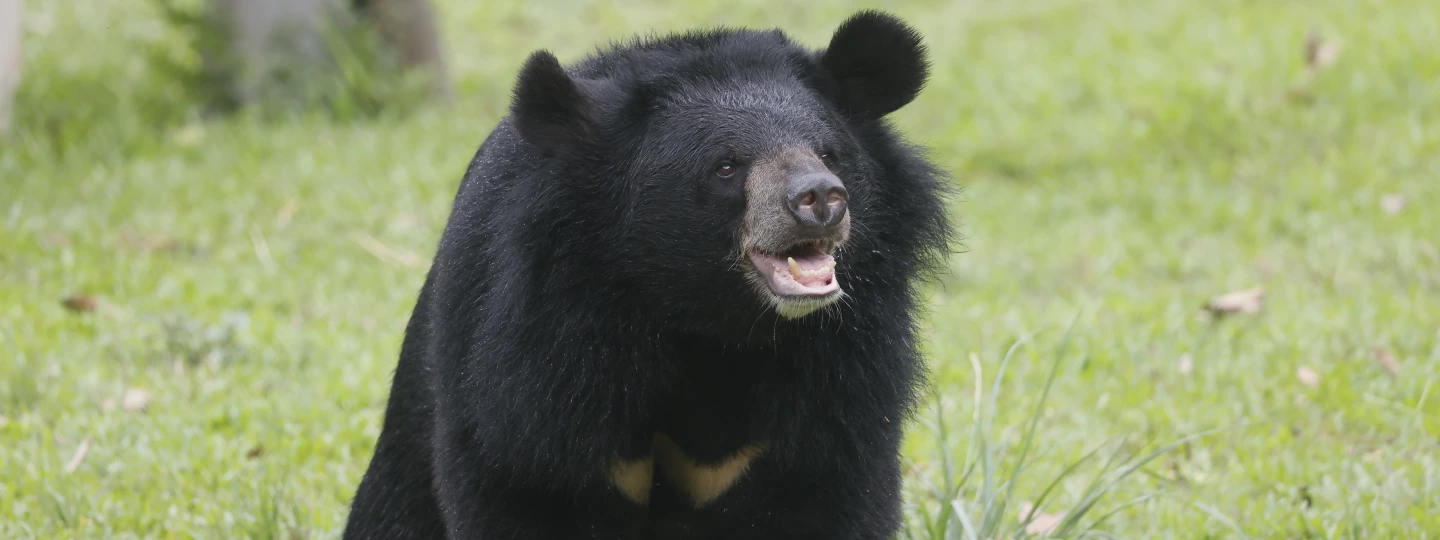
A moon bear is also known as an Asiatic black bear (Ursus thibetanus). Moon bears can generally be found in mountains and forest areas across Asia and are sometimes called the Asian black bear, Himalayan bear or Tibetan bear.
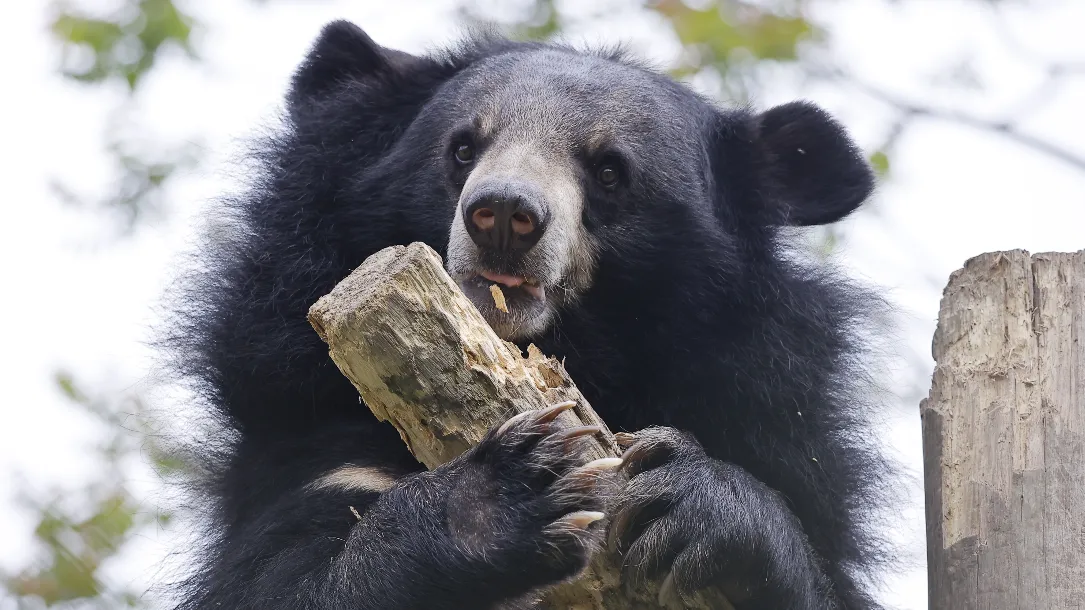
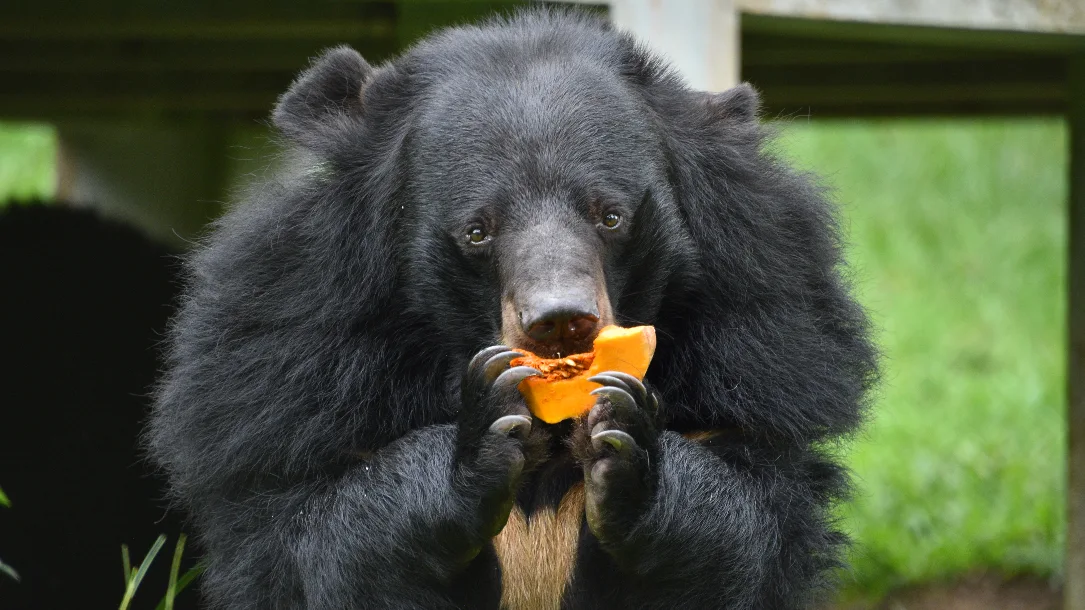
They are medium-sized, at around 100-200kg, and eat a wide range of food. Moon bears consume vegetation, nuts, seeds and fruit, but also eat insects and will occasionally hunt other mammals for protein, making them omnivores.
Why are moon bears called moon bears?
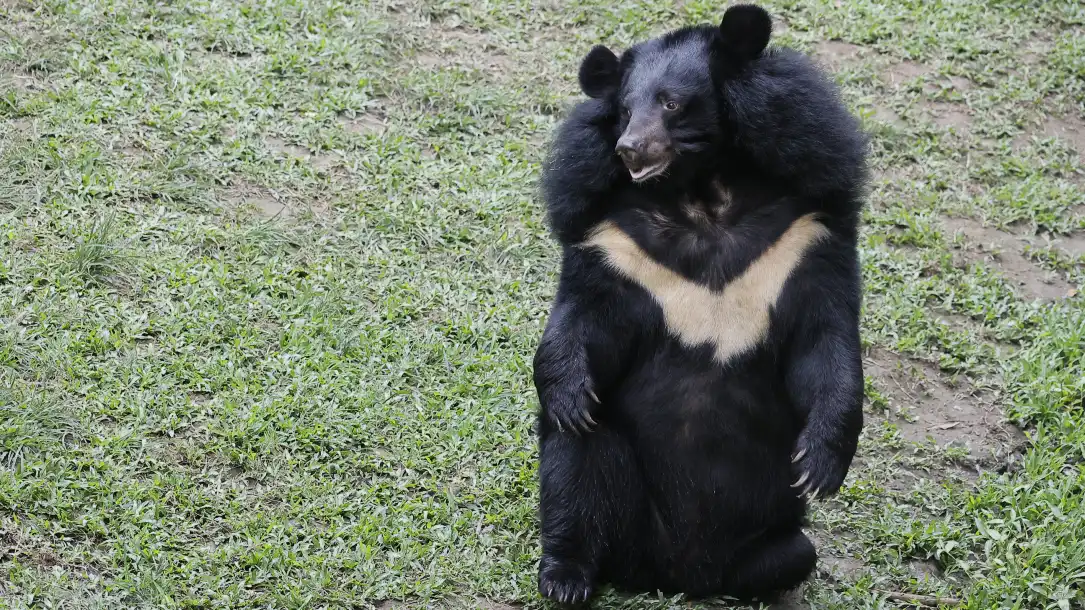
Moon bears have a distinctive white, yellow or cream coloured crescent shaped patch on their chests, resembling a moon and standing out against their jet black fur.
What is the difference between a sun bear and a moon bear?
Although they share the same Asian forests, moon bears and sun bears are two separate, distinct species, with different traits and characteristics.
Sun bears are much smaller and stockier, at only 25-65kg, and have a deep orange or yellow mark on their chest which looks like a rising sun. Each sun bear’s marking is unique, like a fingerprint.
Sun bears prefer tropical forests and have long tongues for catching insects and gathering honey from deep tree hollows, whereas moon bears are built for varied climates, including the freezing Himalayan mountains.
Sun bears are active during most of the day, compared with the moon bear’s mainly dawn and dusk activity, and don’t have a defined breeding season, whereas moon bears will breed in June and July.
Both sun bears and moon bears build their nests in hollow trees, logs or high tree branches.
| Scientific name | Ursus thibetanus |
| Other names for moon bears | Asiatic black bear, Asian black bear, Himalayan bear, Tibetan bear |
| Where moon bears live | Stretching from Iran in the west to Japan in the east, spanning 18 countries including China, Russia, India and Vietnam |
| Habitat | Forests and mountains |
| Height | 1 to 2 metres, when upright |
| Weight | Males 100-200kg, females 40-125kg |
| Life expectancy | 20-30 years in the wild, 30-35 years in captivity |
| Behaviour | Excellent climbers, spending half their lives in trees Most active at dawn and dusk Highly intelligent, with distinct personalities |
| Conservation status | Listed on the IUCN Red List due to population decline |
| Major threats | Deforestation and habitat destruction, poaching and the illegal bile trade |
| International Moon Bear Day | 8 August each year, to raise awareness and promote action to protect the moon bear |
The natural moon bear habitat
Moon bears can be found across 18 countries, spanning Asia and beyond. They live in forests and mountains from Iran to Japan.
Where do moon bears live in the wild?
Moon bears live primarily in mountainous forests across Asia, but also inhabit tropical rainforests and lower-altitude woodlands. They can be found at elevations between 1,000m and 4,300m, and are excellent climbers, foraging for fruits and nuts and creating leafy feeding platforms in trees. In fact, moon bears spend half their lives up in the branches.
What do moon bears eat?
Their diet changes with the seasons, with succulent vegetation in the spring, and nuts in the autumn to build fat for hibernation. In autumn, they feed intensely, eating up to ten times the normal amount of food to gain fat for their winter hibernation.
Moon bears are also opportunistic, eating bird eggs, small mammals, carrion and will occasionally raid beehives for honey.
How long do moon bears live?
They generally live for 25 to 30 years in the wild, reaching their prime breeding age around four to five years. In captivity, moon bears can live up to 35 years.
Are moon bears endangered?
Moon bears are classified as ‘Vulnerable to Extinction’ on the IUCN Red List. Population decline is due to habitat loss as a result of logging and farming, illegal poaching and the bear bile industry. An estimated 10,000 are still held on bear bile farms. Officially rated as ‘Vulnerable’, moon bears are often described as ‘Critically endangered’ in specific regions.
How many moon bears are left in the world?
While we don’t know the exact number of moon bears, we can estimate around 25,000-50,000, worldwide, however the population has likely declined by up to 49 per cent over the past 30 years due to deforestation and illegal trade.
Although we’ve seen their numbers drop globally, in Japan, where there are strict conservation efforts, populations of moon bears have increased.
Why moon bears are under threat
Some of the biggest threats to moon bears centre around human activity.
Bears are hunted for their body parts, including their paws (used in soup), gall bladders and skin, with poachers selling these to Asian markets, driven by a high demand.
Deforestation is destroying their natural habitat, with logging and the expansion of agricultural farms leaving them with continually reducing areas to live. As their habitat disappears, human settlements become closer, leading to increased conflict, entrapment and killing.
Hunters looking for other animals will set snare traps, accidentally catching bears and other animals, killing or maiming them and leaving them with severe injuries.
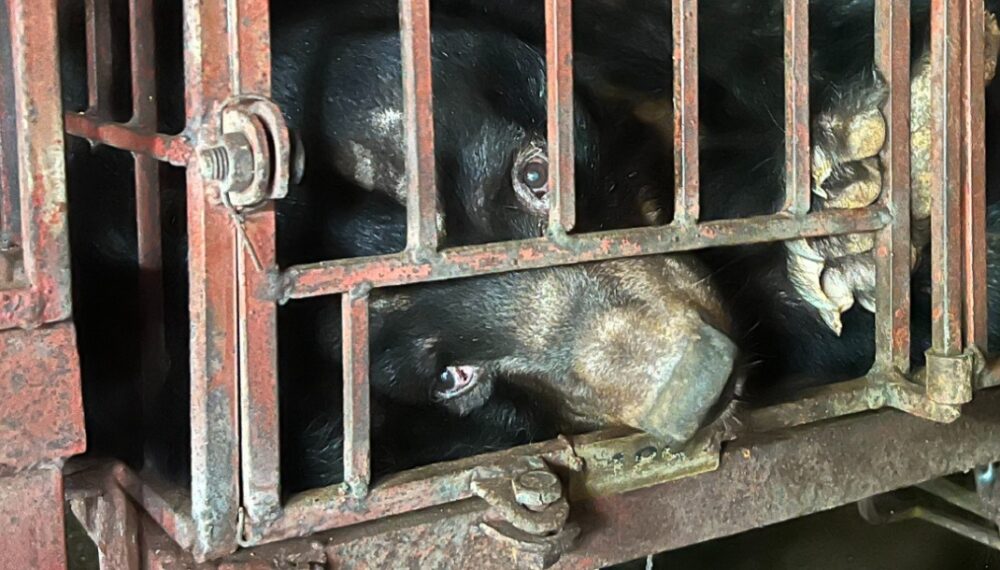
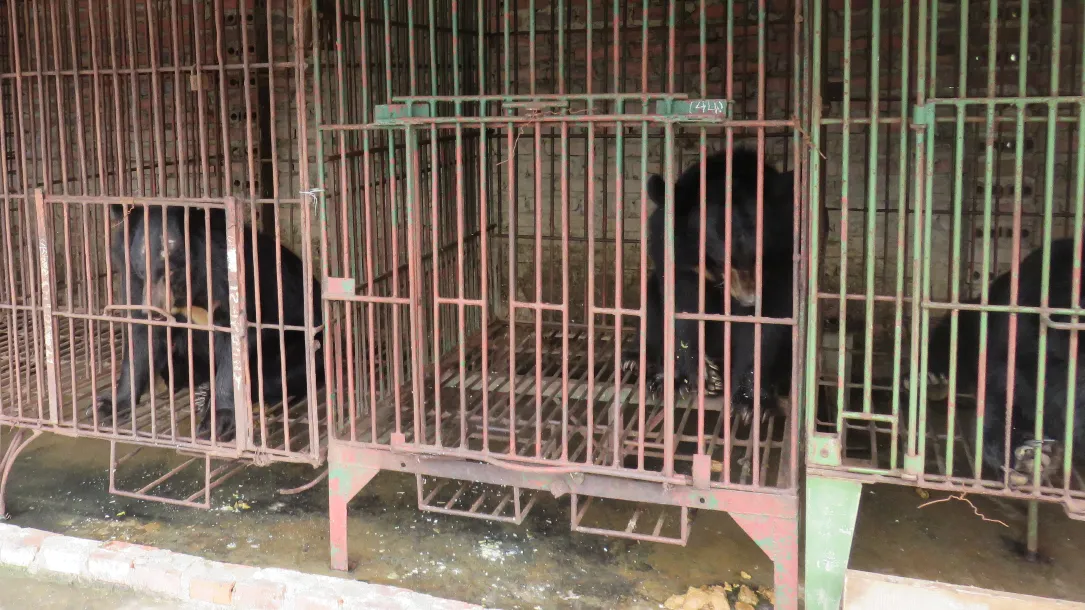
Bear bile farming is still exploiting bears across Asia, with up to 20,000 still cruelly held around the world on bear bile farms in small enclosures, leading to severe psychological and physical trauma.
Moon bears in bear bile farming
Moon bears, as well as sun bears and brown bears, are trapped in a cruel trade across Asia. Used in traditional medicines, bear bile is thought to have helpful properties in treating liver and gall bladder conditions, as well as being used in cosmetics.
Bears are kept in small ‘crush’ cages that prevent them from moving, and are held for their lifespan, undergoing constant extraction, often performed without anaesthesia or proper veterinary care. Bears can be physically deformed due to confinement, and are often starved, living in bleak conditions with no natural light, poor nutrition and hygiene. They commonly suffer devastating health consequences.
Read more about bear bile farming.
Moon bear rescue and rehabilitation
We are working to end the bear bile trade worldwide.
Animals Asia has rescued over 300 bears from bile farms in Vietnam, where the practice is illegal, with support from government organisations, local enforcement agencies and local communities.
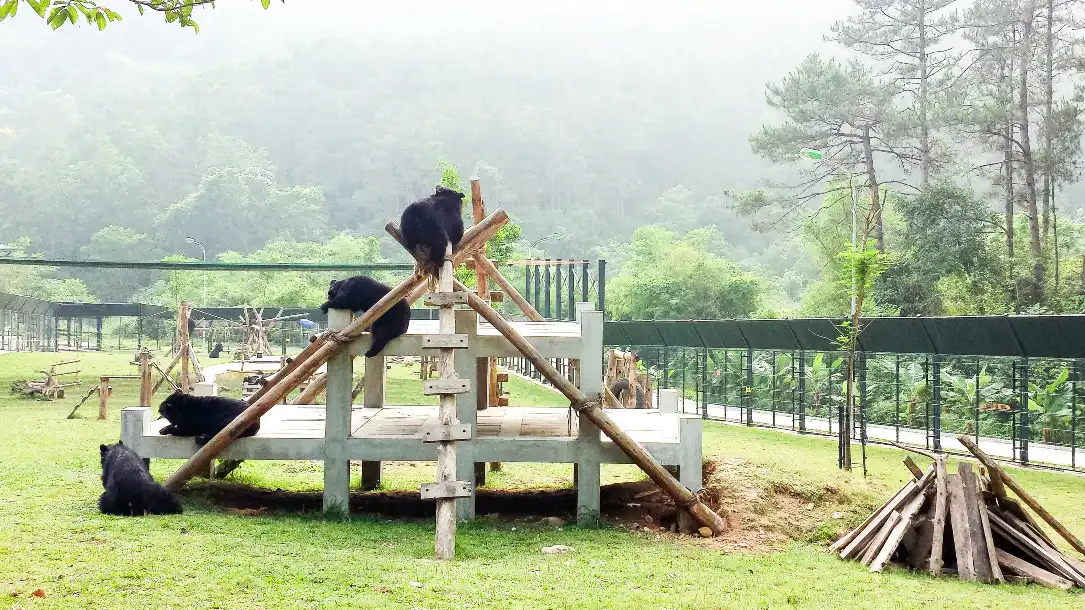
After negotiating their release, we take each rescued bear to one of our sanctuaries to start their new life. These are safe, peaceful havens where we provide lifelong love and care to rescued bears.
What is life like at an Animals Asia moon bear sanctuary?
Their healing starts slowly and carefully – from quarantine to their first steps outside. Read about what happens when a rescued bear arrives at a sanctuary.
Every bear must go through quarantine when they arrive at an Animals Asia bear sanctuary, where we give them urgent medical treatment, nutritious food and daily enrichment while they begin to bond with their carers. Quarantine also protects the other bears from potential diseases brought in and gives the new bears a chance to adjust to life outside a cage.
They then move to their own den, giving them space to adjust and explore, before they’re released to the wider sanctuary, feeling grass beneath their paws for the very first time.
The sanctuary offers the chance to restore natural behaviours such as foraging, climbing and digging, gives the bears companionship and provides bespoke care, tailored to each bear’s needs.
How you can help rescue moon bears
Supporting charities that work to end bear bile farming is a great way to help in the fight to rescue moon bears.
Donations ensure we can continue to rescue hundreds more bears from bile farms across Asia and end the cruelty for good. From funding bear rescue kits to paying for nutritious food and vet costs, every penny donated to Animals Asia helps the bears. Some of our supporters also leave us gifts in their wills, helping us provide lifelong care for bears living in our sanctuaries in China and Vietnam.
FAQs
Yes, mostly, although in Vietnam the climate is warmer, with food available all year round, so moon bears may not hibernate in this area.
Yes, they spend half their lives in the trees to forage and rest, and build platforms in the branches. They have powerful limbs and sharp, hooked claws which make climbing easy for them.
No, unfortunately not. Bears from bile farms usually have injury and trauma, and haven’t learnt to forage like wild bears, meaning they need special care for the rest of their lives. See how rescued bears begin to heal at a sanctuary.
Help us put an end to animal cruelty
Animals are being captured and exploited every day. Animals Asia has helped thousands, but there is always another animal in need of our help. Please donate today.
Donate now