Animal Sentience
“Animal sentience is the scientifically recognised capacity of animals to consciously experience feelings and sensations, such as pain, fear, joy, and comfort. Recognising animals as sentient beings has far‑reaching implications for ethics, animal welfare, and contemporary law, influencing key legislation like the UK Animal Welfare (Sentience) Act 2022, which seeks to safeguard vulnerable species from harm and exploitation.”
What is animal sentience?
Animal sentience is the capacity for animals to have feelings and sensations, experiencing joy and pleasure as well as pain and fear.
Simply put, it is the ability to feel things.
Do animals have sentience?
Yes – a wide range of animals have sentience, and are emotionally aware of their surroundings, acting on feelings rather than simply instinct. All vertebrates and many invertebrates are scientifically recognised as sentient.
Animal sentience studies and scientific evidence
Scientists can’t directly ask animals how they are feeling! Instead they look for clues and evidence. Scientific research in this area has significantly increased, with studies looking at the cognitive, behavioural, emotional and communication capacities of a wide range of animals including dogs, pigs, crows, octopuses, bees and bears.
Studies have increasingly supported the idea that animals have complex emotional and cognitive capacities, experiencing feelings and sensations that allow them to make choices that support their survival.
Researchers assess a variety of elements when considering sentience, including:
- Problem-solving
- Learning and memory
- Social relationships
- Responses to pain and pain relief
- Play and emotional behaviours
Which animals have sentience?
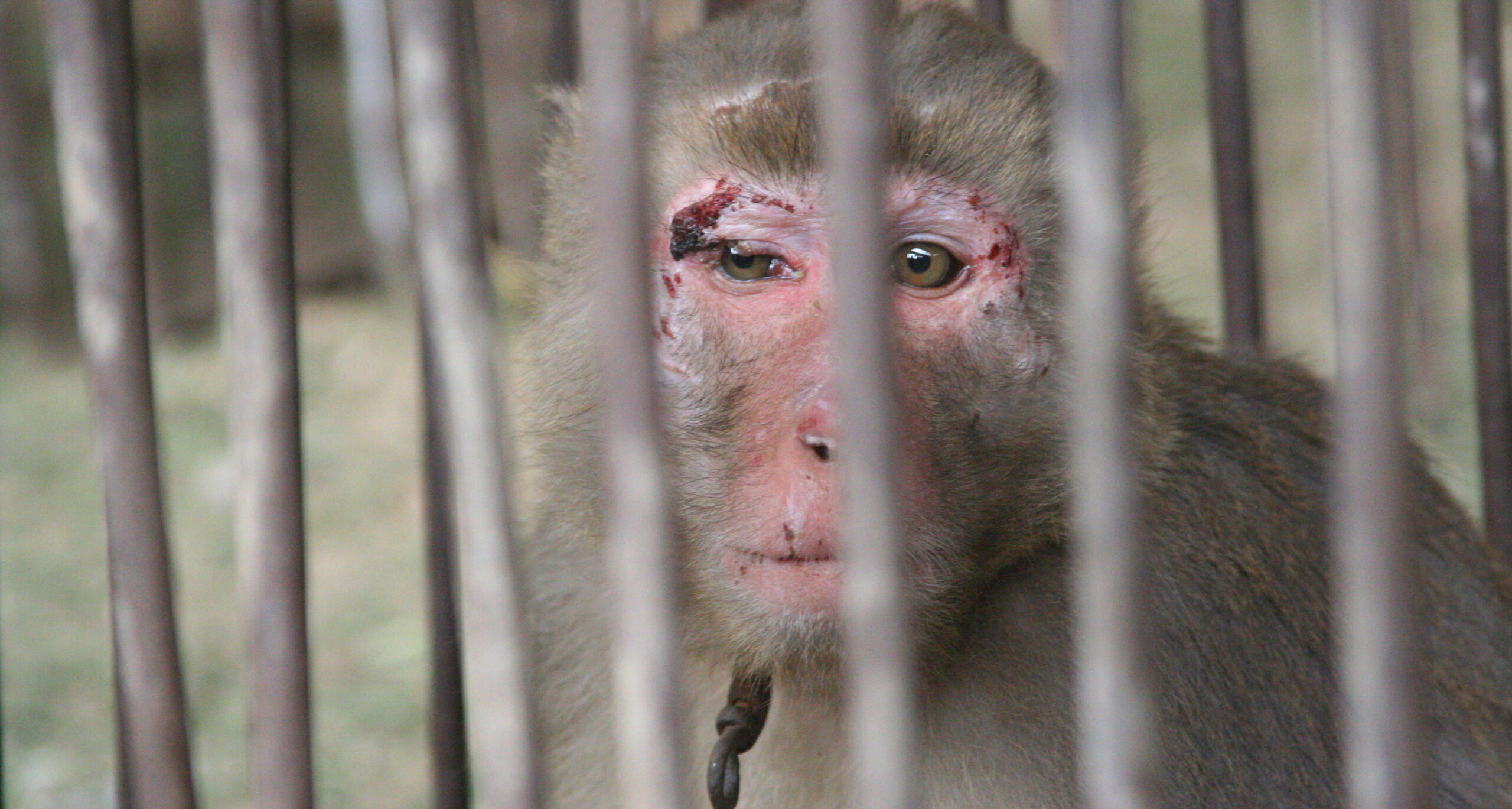
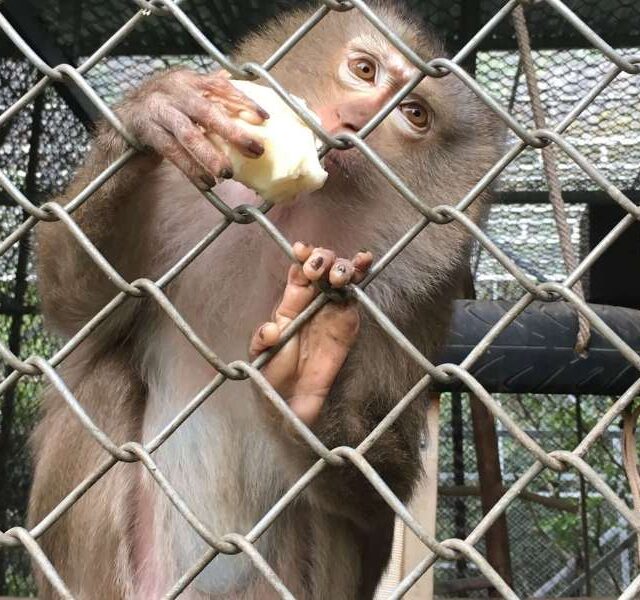
Ground-breaking research1,2 has shown that mammals, birds, fish, reptiles, amphibians and an increasing number of invertebrates including decapod crustaceans and cephalopod molluscs possess complex, rich emotional inner lives. Evidence is also being demonstrated for sentient experiences in many insect species.
Mammals, birds, and fish
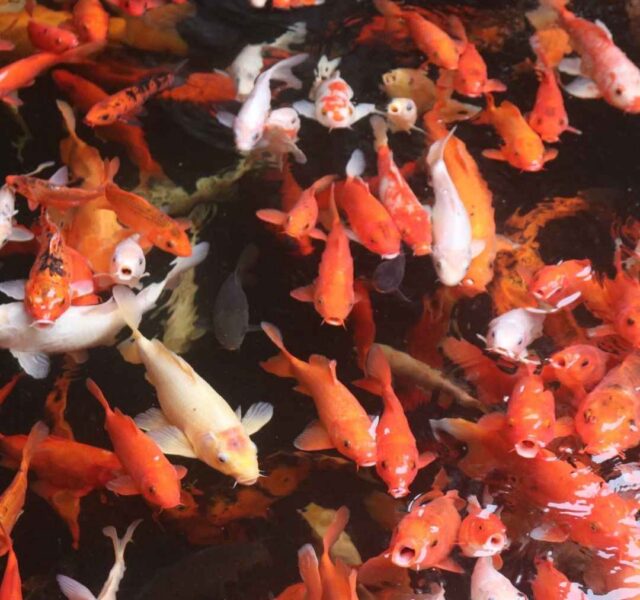
Studies have confirmed that emotional experiences can be contagious among mammals, birds and fish, and scientific advancements have uncovered evidence of elephants mourning loss, crows solving puzzles and fish showing pain-avoidance behaviour.
Do bears have sentience?
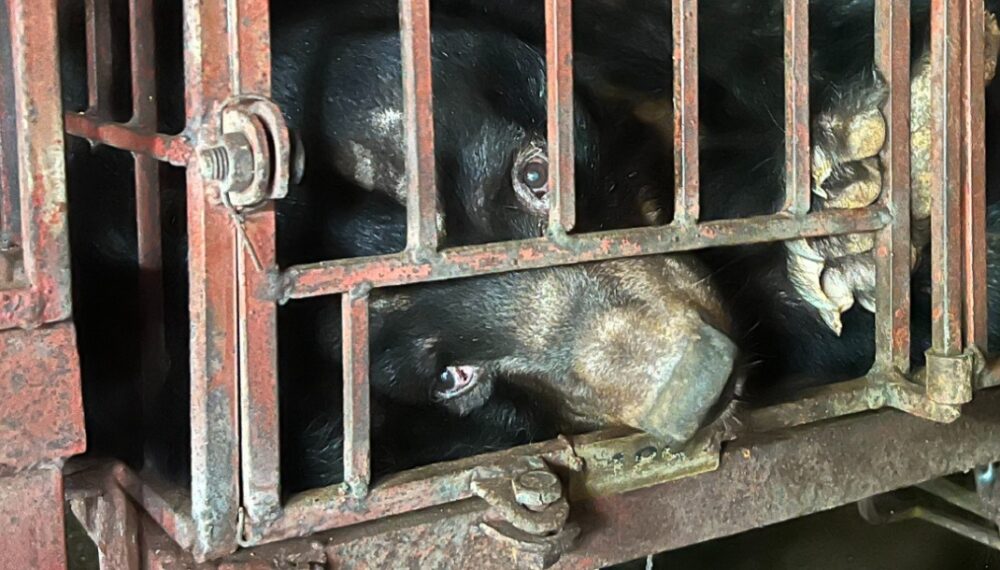
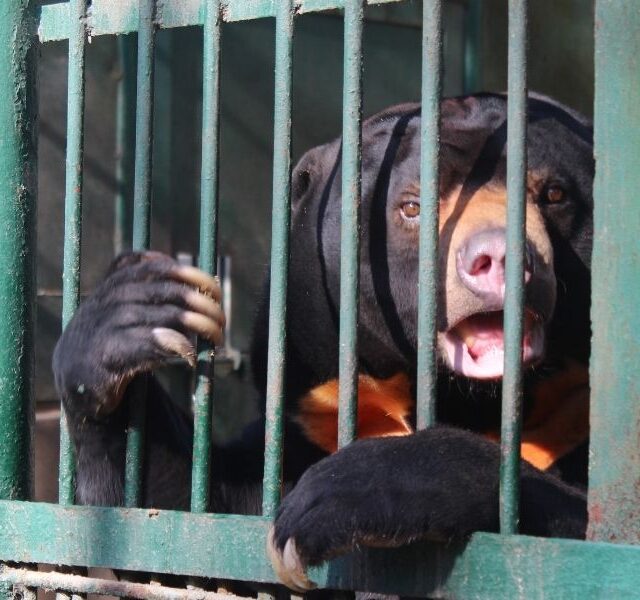
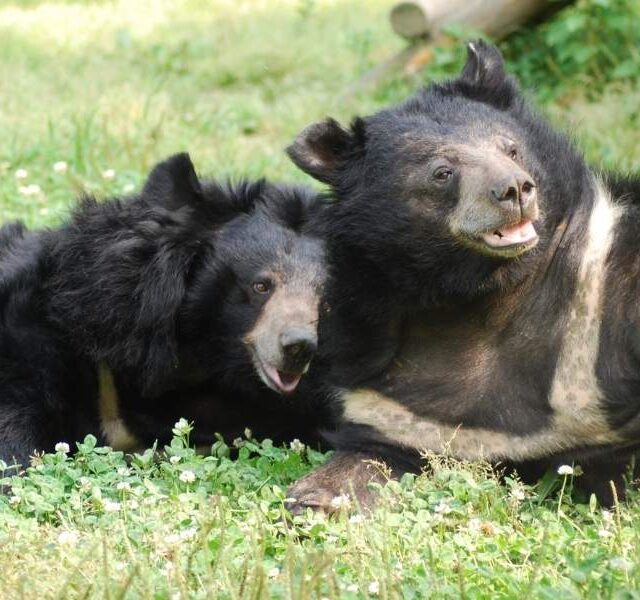
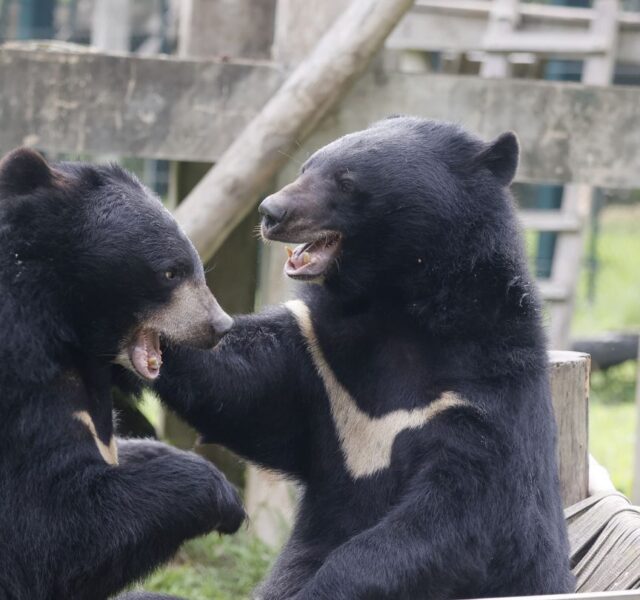
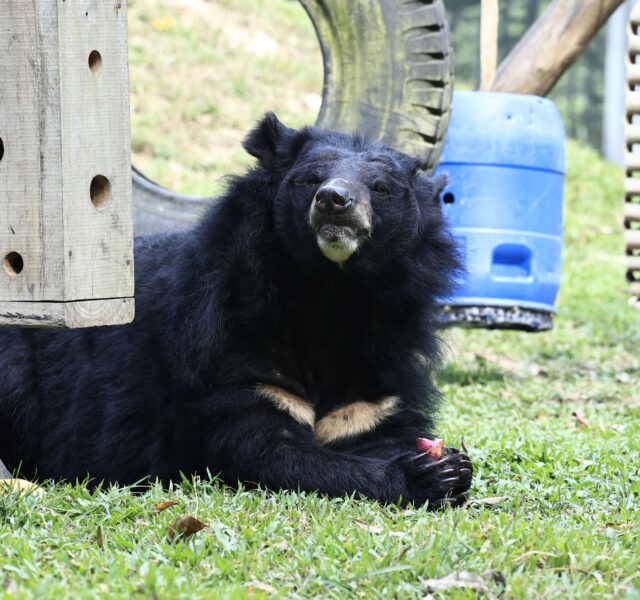
There is no doubt that bears experience pain, fear, stress, comfort and joy. Through our years of experience at Animals Asia sanctuaries, we’ve seen bears exhibit a range of behaviours including:
- Forming social bonds and friendships with other bears
- Showing excitement when enrichment activities are introduced
- Learning new behaviours and routines
- Playing – both independently and with others
- Demonstrating curiosity about their environment
Bears arrive fearful and withdrawn after years in captivity. Over time, they begin to explore, play and interact with other bears, and are able to recover emotionally.
What we’ve learned from our rescued bears: Years of caring for rescued bears have shown that recovery isn’t just physical. We’ve seen bears’ confidence, curiosity, problem solving skills, social interaction and playfulness increase as they settle into sanctuary life.
Did you know…? A rescued moon bear may spend hours foraging, exploring scents and playing. This shows curiosity, choice and emotional well-being.
Sentience in decapod crustaceans and cephalopod molluscs
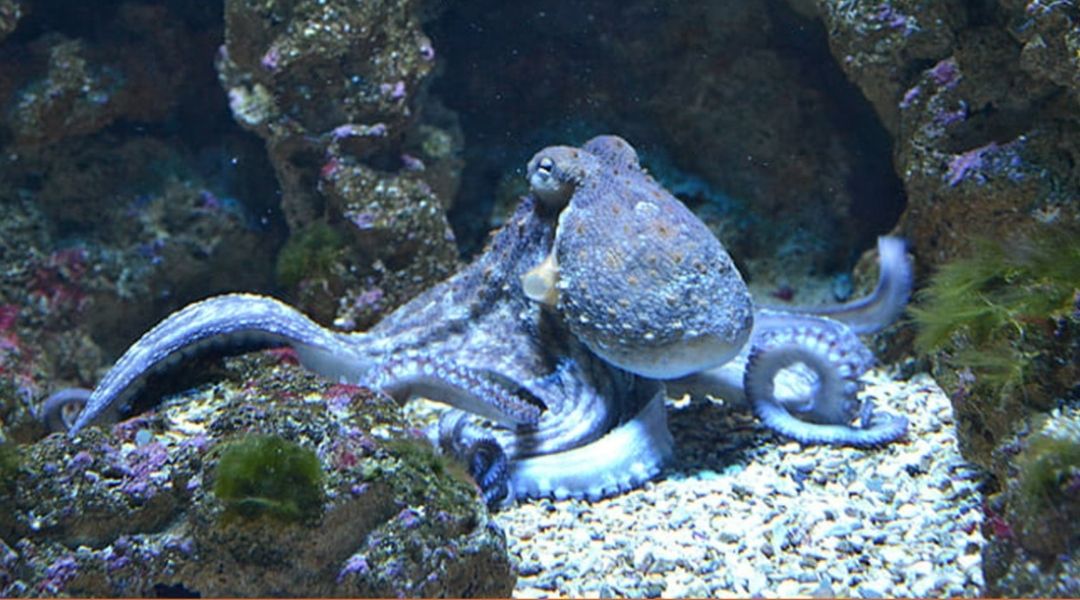
There is ongoing debate about the sentience of invertebrates, however scientific evidence suggests that certain invertebrates such as decapod crustaceans (crabs and lobsters etc) and cephalopod molluscs (octopus, squid etc) are sentient and should be protected by legislation.
Decapod crustaceans: Behavioural experiments showed that crabs and lobsters could exhibit stress, learn to avoid danger and process pain.
Cephalopod molluscs: Reviews conclusively demonstrated that octopuses and squid could feel pain, pleasure and excitement.
Animal sentience law and legislation
In farming, food production and scientific research, laws and legislation are vital for protecting sentient animals.
The UK Animal Welfare (Sentience) Act 2022
This UK act legally recognises animals as living, feeling beings. All vertebrates and certain invertebrates (decapod crustaceans and cephalopod molluscs) are classed as sentient. The Act establishes an independent committee – the Animal Sentience Committee – to ensure the welfare of these animals is considered throughout all government policies.
Did you know…? In 2022, the UK formally recognised the sentience of vertebrate animals, as well as octopuses, squid, crabs and lobsters.
How the animal sentience bill protects wildlife and captive animals
Recognising animal sentience encourages policymakers to consider how decisions may affect animal welfare across a range of areas:
- Wildlife management
- Agriculture
- Transport
- Research
- Captivity
For animals kept in captivity, acknowledging sentience underpins the need to provide appropriate environments where animals can thrive, supporting both physical and psychological well-being.
Global animal welfare and sentience laws
Many countries have incorporated animal sentience into their planning for new legislation and policies.
The European Union recognises animals as sentient beings in its treaties, while New Zealand has strengthened legal protections based on scientific evidence of animal sentience. We’ve also seen laws in Canada and Peru supporting animal protections on the basis of sentience.
Although there is not a singular global law, we’re seeing growth in international recognition that animals experience both suffering and wellbeing, and that they deserve consideration across a range of laws and policies.
Why sentience matters for animal welfare
Recognising animal sentience has a profound impact on our responsibilities towards animals. If we understand that animals experience pain, fear and distress, we have an obligation to minimise their suffering. Equally, we need to recognise their ability to experience joy, comfort and pleasure, and strive to provide positive experiences.
Animal welfare is not solely about keeping animals alive, but also ensuring their lives are full of opportunities and choice relevant to them as individuals.
The impact of sentience on animals in captivity
An animal’s environment can have a profound effect on their welfare. Limited space, isolation and lack of stimulation can have negative physical and psychological impacts.
Understanding sentience means we can design more species appropriate spaces for animals, providing enrichment, complexity and appropriate care that allows animals to express their natural behaviours and provides positive experiences.

How sentience impacts animal testing
New legislation, awareness-raising and research have helped shape laws across the world, governing the use of animals in research. Many countries require researchers to minimise pain and distress as far as possible in animal testing, via the ‘3Rs’ framework:
Replacement – using non-animal models to avoid using sentient animals.
Reduction – using the absolute minimum number of animals to obtain significant data.
Refinement – minimising pain and suffering, while enhancing animal welfare. Where suffering is unavoidable, guidelines are in place to use the least sentient species possible.
There is a great deal of scientific debate over animal testing on sentient animals, with pioneering research examining ethics, animal communication and even artificial intelligence. However, there is a global moment to increase efforts to develop alternatives to animal testing.
How animal sentience has impacted agriculture
Farming around the world has been significantly impacted by a growing awareness of animal sentience. Welfare standards have been improved to focus on behavioural and emotional well-being, as well as physical health. This knowledge is leading the drive to improve the welfare of farmed animals with improvements in living conditions, reducing stress during transport and more humane handling. Our understanding of animal sentience is also leading many to question if we should be farming animals for food production at all.
How can you help?
Every one of us can play a part in creating a world where animals are treated with the compassion and respect their sentience deserves.
- Learn more – explore the key issues behind the work of Animals Asia in sentience and welfare.
- Make compassionate choices – consider the welfare of animals when choosing products and services.
- Use your voice – sign our letter to end bear bile farming
- Support animal welfare organisations – donate to support charities like Animals Asia in their mission to end bear bile farming.
Sources: 1 Animal sentience: history, science, and politics (2021) by Rowan, Andrew N; D’Silva, Joyce M; Duncan, Ian J.H.; and Palmer, Nicholas
2 London School of Economics (LSE) report, Review of the Evidence of Sentience in Cephalopod Molluscs and Decapod Crustaceans (2021) by Dr. Jonathan Birch et al.
Help us put an end to animal cruelty
Animals are being captured and exploited every day. Animals Asia has helped thousands, but there is always another animal in need of our help. Please donate today.
Donate now