The social and emotional lives of bears
Bears are expressive, social and emotionally complex. They share information and display emotion and empathy through scent, sound, body language and touch.
For rescued bears, having the freedom and confidence to express these natural behaviours are key to their recovery. As they heal, their curiosity, playfulness, affection and trust re-emerge.
Communication
Visual cues and body language
Bears use posture and movement to signal intent. Lowering the body or turning away shows reassurance or submission, while approaching confidently can assert dominance.
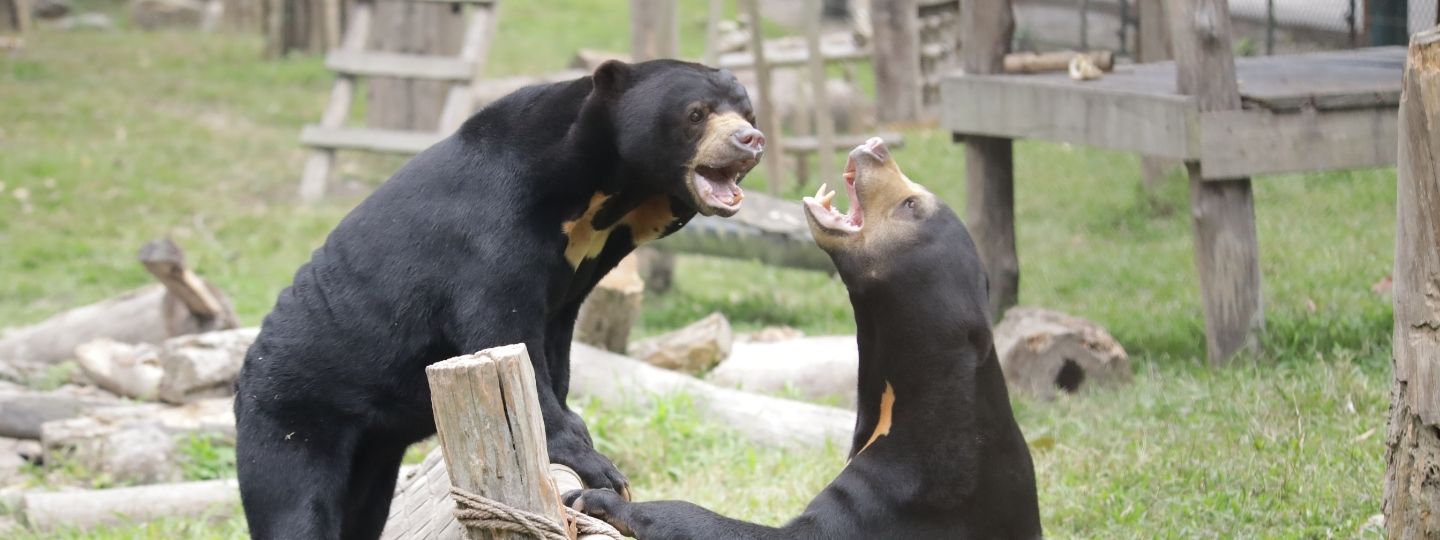
During play, bears exaggerate movements – head bows, rolling, or gentle pawing – to show friendly intent.
Sun bears are especially expressive. They use facial expressions similar to humans and great apes, often mimicking another bear’s face during play – a gesture of empathy.
Vocal communication
Bears use a variety of sounds – huffs, moans, barks, growls and chuffs – to express mood and intent.
Cubs hum when content, cry when separated, and groan when frustrated. Mothers answer with chuffs or low grunts to reassure and guide them.
At our sanctuaries, rescued bears rediscover these sounds: contented huffs during foraging, soft hums when relaxed, and playful calls between companions. Each noise is a sign of healing and reconnection.
Scent and chemical messages
Bears use scent to communicate with others across distances. Twisting their feet into the ground releases complex chemical signatures that mark identity and intent. Other bears follow and layer their own scent – an invisible dialogue etched into the soil.
They also rub against trees, urinate and defecate to leave traces that inform others who’s nearby and if it’s safe to interact.
Emotional bonds and family life
Mother–cub relationships
Few bonds in nature are as strong as that between a mother bear and her cubs.
Mothers are affectionate, protective and deeply attentive. They care for their young for up to three years and teach them what to eat, where to forage and how to stay safe.
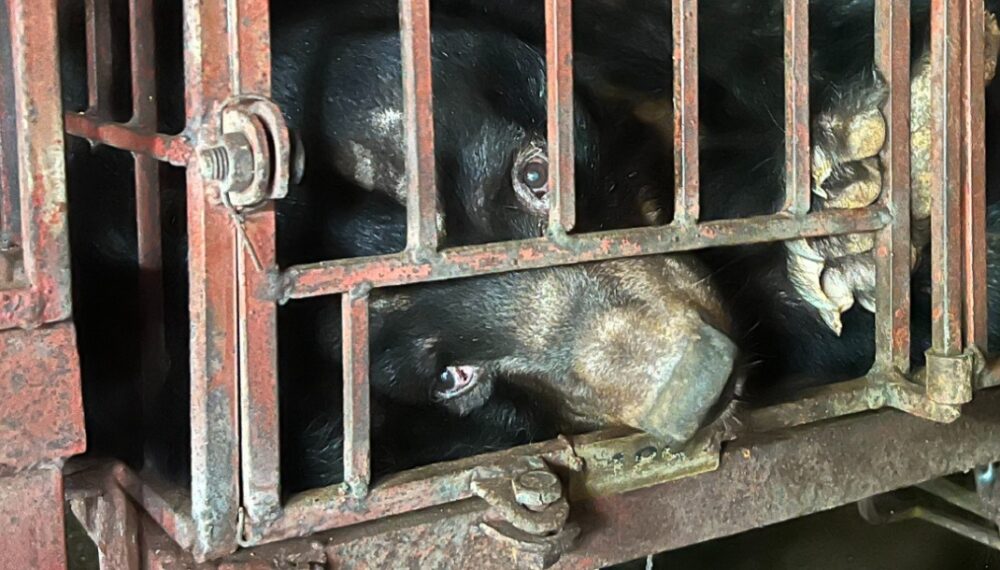
Tragically, every bear at our sanctuaries was taken from their mother as a cub and likely watched her being killed in the process, stolen for the bile farming, exotic pet or entertainment industries. For a species defined by deep maternal care, that early separation leaves lifelong scars.
Yet even after decades of abuse, bears can rediscover connection, comfort, and joy.
Play and moral behaviour
Play teaches young bears coordination, confidence and social understanding. It also teaches empathy: during play, stronger bears restrain themselves to keep the game fair – a moral choice that maintains harmony and builds trust.
Healing and friendship at the sanctuaries
Years of isolation can dull a bear’s instinct to socialise, but with space and care, those instincts return. At our sanctuaries, bears live in small, carefully chosen social groups. Friendships form slowly through shared curiosity, gentle play or quiet rest side by side.
Learning to communicate again – to read body language, respond to calls, and recognise social cues – is an integral part of every bear’s recovery.
Some pairs become inseparable, others simply coexist peacefully. Every connection, every shared moment, is a sign of resilience and hope.
Why understanding bears matters
Every growl, scent mark and gentle touch reveals a rich world of intelligence and emotion.
When we realise how bears communicate and care for each other, we understand that they must never be treated as commodities.
Learning about their social and emotional lives deepens our empathy – and strengthens our determination to protect them.
Help us put an end to animal cruelty
Animals are being captured and exploited every day. Animals Asia has helped thousands, but there is always another animal in need of our help. Please donate today.
Donate now