Restoring natural behaviours
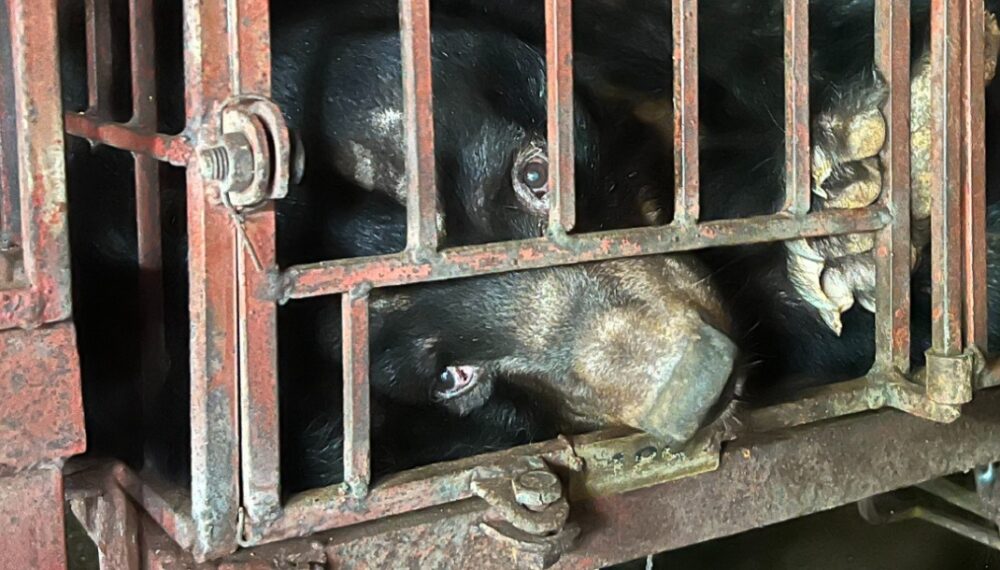
Years of deprivation severely limit a bear’s ability to behave as they would in the wild.
Denied stimulation, access to the outdoors, and space, many arrive with limited curiosity and movement. But their instincts haven’t vanished – they’ve just been suppressed.
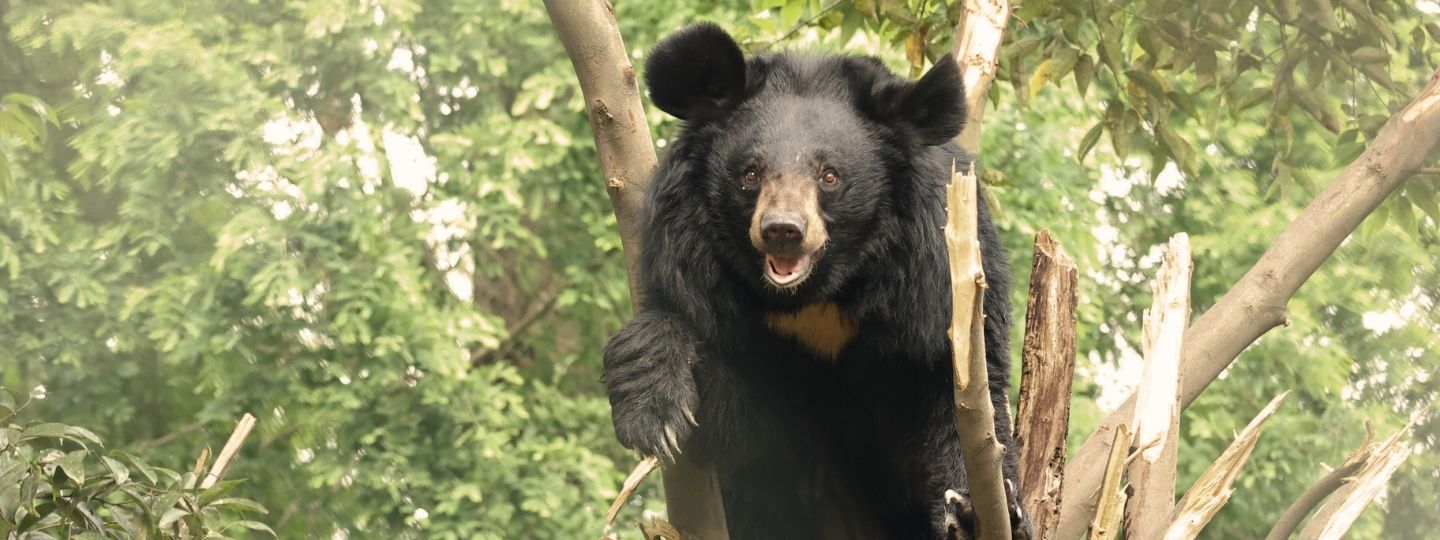
At Animals Asia’s sanctuaries, we create the conditions for these natural behaviours to resurface. From foraging and climbing to swimming and social play, every behaviour rediscovered is a vital part of a bear’s rehabilitation – and their right to a life worth living.
How we help restore natural behaviours
The semi-natural enclosures at our sanctuaries provide:
- Climbing structures to strengthen limbs and offer vantage points
- Pools and ponds to cool off, play and bathe
- Logs and trees for scent-marking and claw conditioning
- Varied terrain and planting to stimulate exploration
These features not only support physical recovery but promote confidence and choice – key elements in returning agency to each bear.
Enrichment: the engine of natural behaviour
Enrichment is at the heart of restoring natural behaviours. By mimicking challenges a bear might encounter in the wild – like searching for food or manipulating objects – enrichment reignites instincts dulled by trauma and confinement.
This includes:
- Puzzle feeders that simulate foraging
- Scent trails and novel smells to spark curiosity
- Seasonal treats and toys to encourage play and exploration
The journey starts in quarantine
From the moment they arrive at sanctuary, carers introduce gentle enrichment and stimuli to begin reigniting the bears’ curiosity.
In quarantine, bears experience:
- New smells, textures, and tastes
- Toys and objects to stimulate curiosity and a sense of play
- Browse and bedding to encourage nesting and provide comfort.
The first steps towards freedom
As bears graduate from quarantine to dens and into the wider sanctuary, bears are reunited with their wild instincts and behaviours.
In their first weeks at sanctuary, bears will:
- Touch grass and feel soil under their paws for the first time
- Splash in water, dig, scent-mark, or scratch trees
- Make choices on where and when to forage, play, nap, swim, climb and socialise
- Begin exploring their new world on their own terms.
Help us put an end to animal cruelty
Animals are being captured and exploited every day. Animals Asia has helped thousands, but there is always another animal in need of our help. Please donate today.
Donate now