What Is Animal Sentience? Why It Matters This Moon Bear Day
What does it mean to be a sentient animal?
8th August is International Moon Bear Day – a day to recognise these remarkable animals and raise awareness of the threats they face.
For Animals Asia, it is also an opportunity to reflect on the importance of animal sentience and why recognising it is fundamental to the way we understand and care for them. Science is continually expanding our understanding of this topic, revealing the remarkable ways animals can feel, learn and experience the world around them.

Animals are more than their bodies
For a long time, animals were often viewed primarily in terms of what they could provide for us in terms of food, labour, companionship or entertainment. But growing scientific evidence tells us that animals are emotionally & cognitively complex individuals not simply biological machines responding to their surroundings.
Animals experience the world in many similar ways to humans.
They learn from what happens to them, remember past experiences to help inform their future decision making, , seek out positive experiences and, in many species, form complex social relationships.
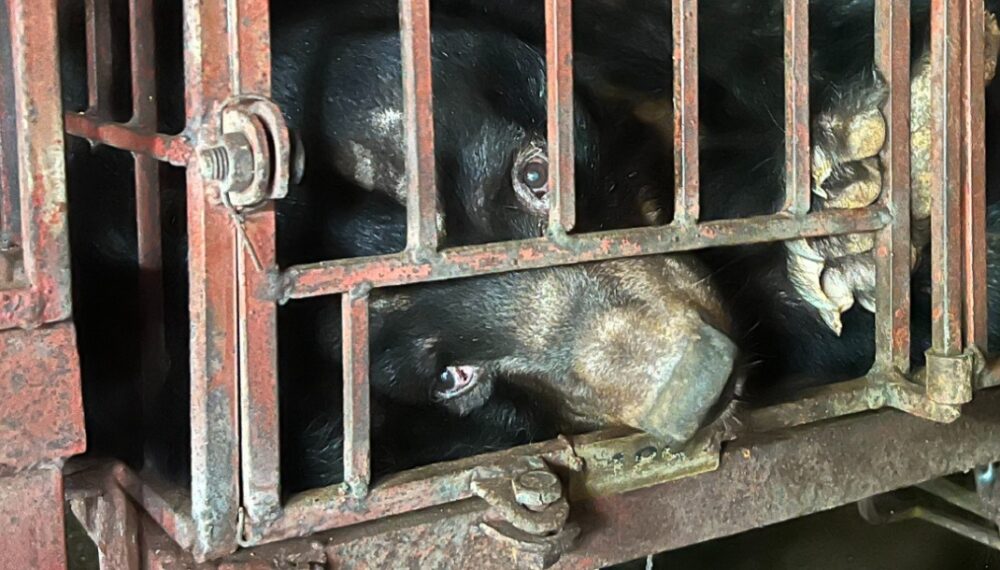
Think of a rescued moon bear arriving at an Animals Asia sanctuary after years of confinement. Their needs are not simply food, water and veterinary treatment. They need space to explore. They need stimulation and enrichment. They need opportunities to forage and make choices. And they need to feel safe.
These needs reflect far more than survival. They are evidence of a sentient animal that experiences the world physically and emotionally, and whose wellbeing depends not only on avoiding suffering, but on having opportunities to thrive.
What does science tell us about animal sentience?
Scientists have studied animal sentience in many different ways, looking at behaviour, physiology, cognition and neurological responses.
They ask questions such as: Can an animal learn from painful experiences, anticipate what is going to happen, seek out comfort, solve problems, or make choices?
The answers have been fascinating.
Studies have found evidence of sentience in animals far beyond the mammals, birds, reptiles and amphibians that many people might instinctively recognise as capable of feeling. Research into fish and crustaceans – including crabs and lobsters – has found evidence of responses to pain and harmful situations, learning and avoidance behaviour.
This growing body of evidence has helped challenge one of the oldest assumptions about animals: that if an animal looks very different from us, it must experience the world very differently too.
The more we learn, the more we discover that the animal kingdom is filled with remarkable minds and rich emotional lives.
Global recognition of animal sentience
The European Union recognises animals as sentient beings in its treaties, while countries including the United Kingdom, New Zealand, Chile, Colombia and Peru have introduced legislation that reflects this understanding. Elsewhere, nations such as Canada have also strengthened legal protections by recognising animals as living, feeling beings whose welfare deserves careful consideration. At the time of writing, while both the United States and Australia have animal welfare legislation, neither currently has a national law formally recognising animal sentience.
Around the world, scientific understanding of animal sentience is continuing to influence discussions about animal welfare and legislation.
Research is exploring the possibility of sentience in other groups of animals, including insects. In the UK, insects are not currently included within the animals recognised as sentient under the Animal Welfare (Sentience) Act, but ongoing research into their capacity for conscious experience is demonstrating its presence in a variety of different species groups, including bees, crickets and cockroaches amongst others.
The more we learn, the more complex and fascinating the animal world becomes.
From recognition to responsibility
Once we accept that animals can experience pain, fear and distress, it becomes harder to argue that these experiences do not matter.
Sentience changes the question from “What can we do to this animal?” to “How will this affect the animal?”
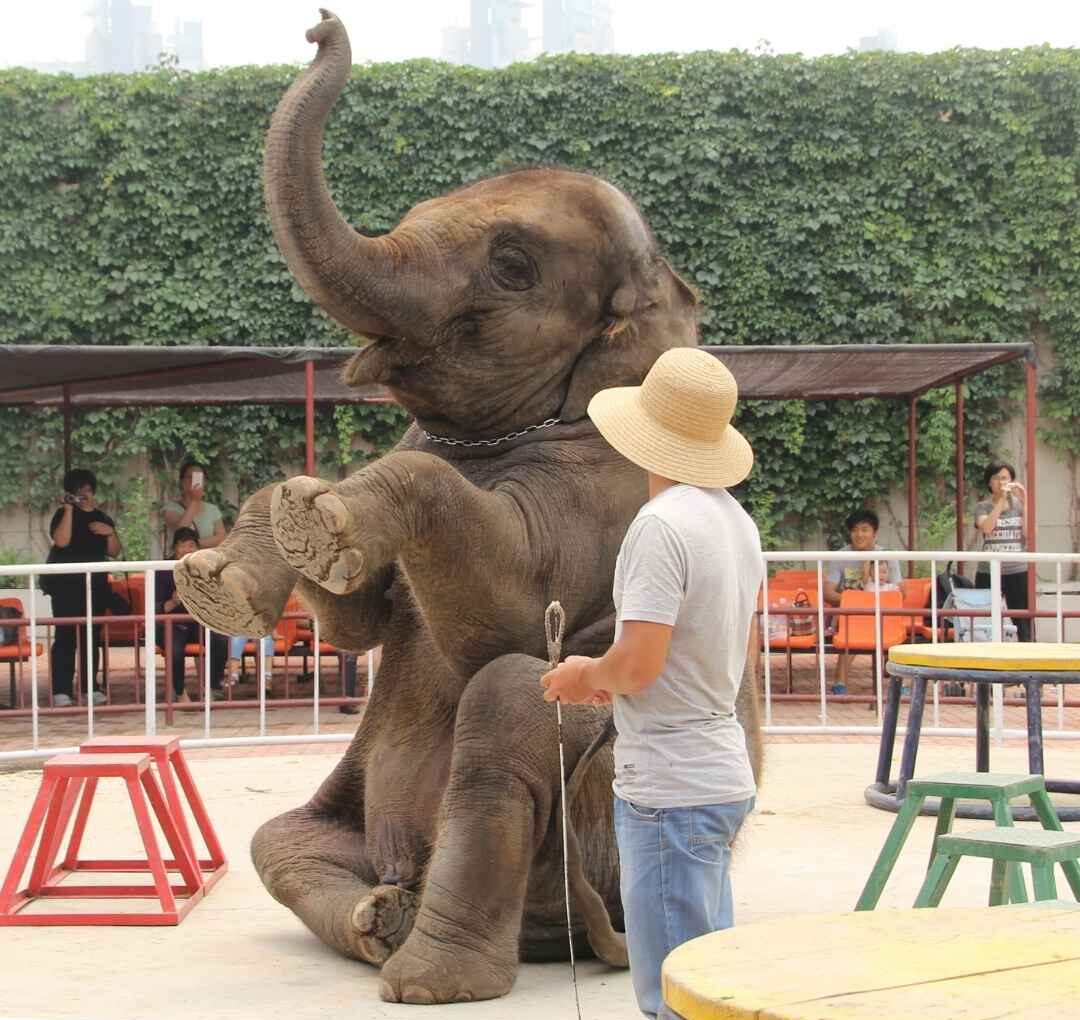
That shift can influence decisions across many areas of human activity. From farming and food production to wildlife management, transport, scientific research and captivity.
For animals living under human care, recognising sentience means looking beyond basic survival. It means creating environments where animals can express natural behaviours, make choices and have positive experiences. This also means recognising our responsibility to minimise suffering and create opportunities for animals to experience safety, comfort and positive wellbeing.
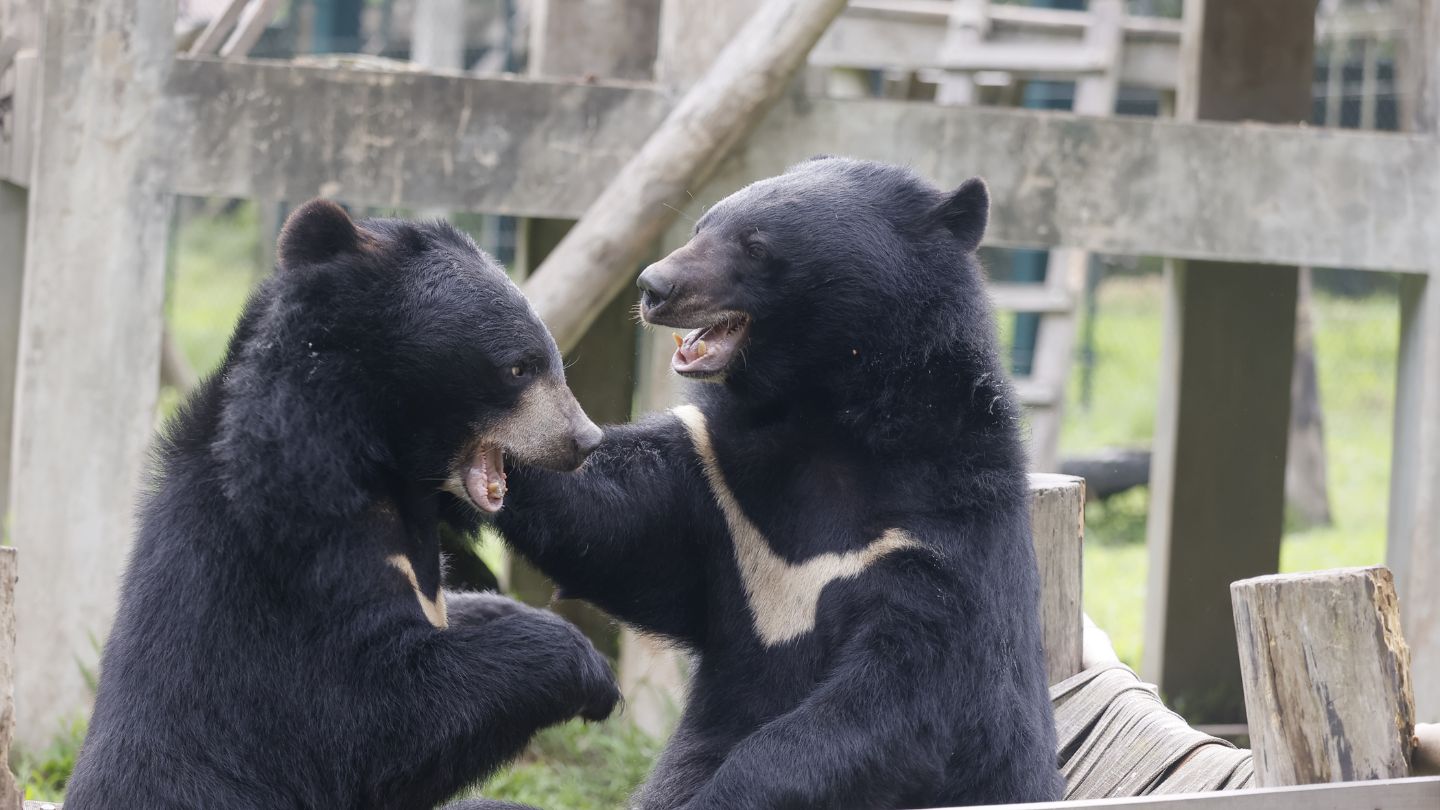
At Animals Asia’s sanctuaries, this principle is at the heart of daily life. Rescued bears receive veterinary care, nutritious food and a safe place to live, but they also receive enrichment, opportunities to explore and plenty of chances to simply be bears.
How sentience shapes animal welfare
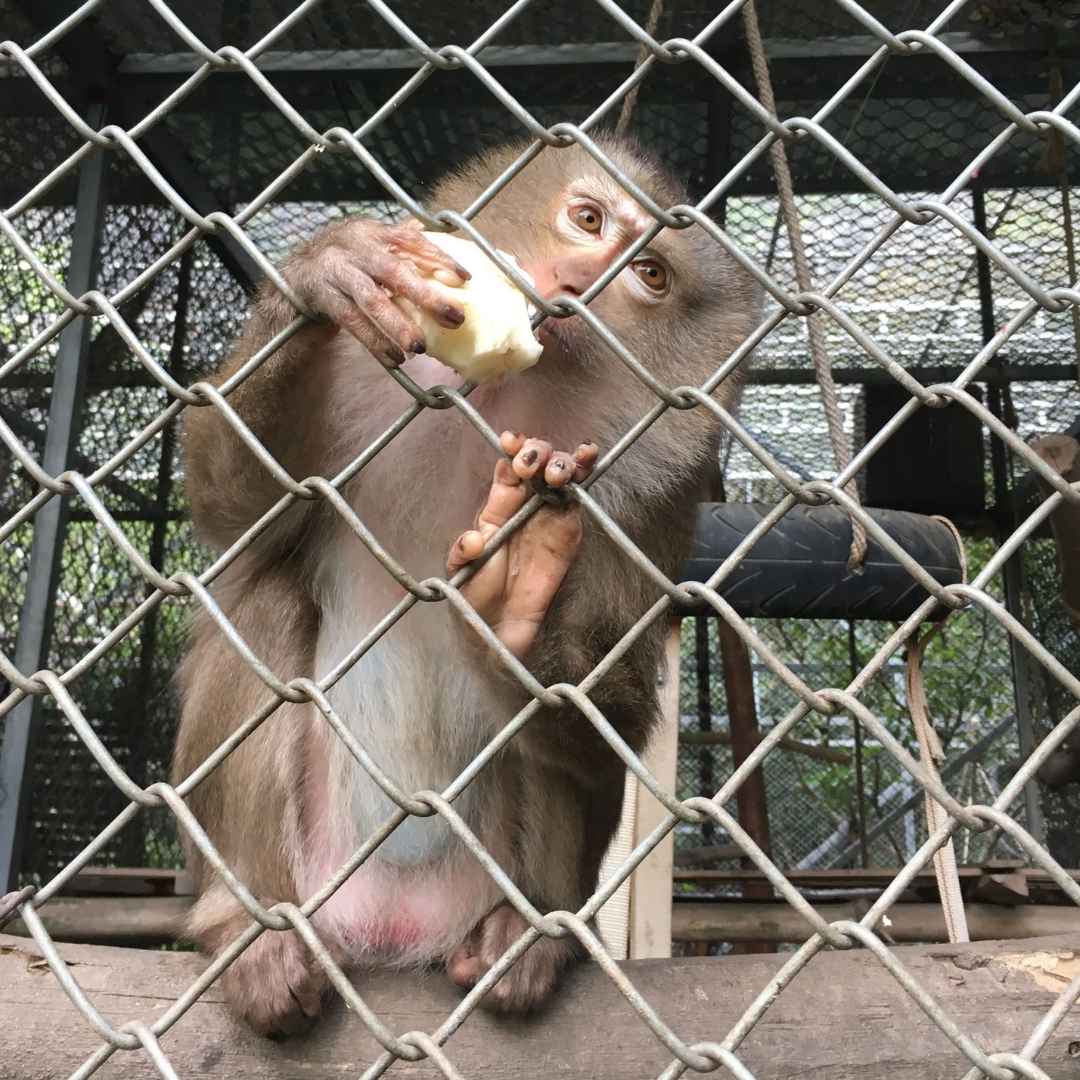
Captivity can have a profound impact on an animal’s physical and psychological wellbeing.
Limited space, isolation, boredom and a lack of opportunities to make choices can all affect an animal’s welfare. For an intelligent, curious animal such as a moon bear, an environment that provides little stimulation can be especially damaging. The suffering experienced by moon bears on bile farms demonstrates why recognising animal sentience matters. After years of confinement and deprivation, many rescued bears require rehabilitation to heal both the physical injuries and the psychological impacts of their experiences.
Animals need opportunities to explore their surroundings, investigate new things, forage, climb, play and rest. They need environments that allow them to express behaviours that are meaningful to them.
At Animals Asia sanctuaries, something as simple as a hanging treat, a new object to investigate or a chance to explore a new area can provide an important moment of choice and discovery.
Greater recognition of animal sentience has helped transform the way bears are viewed, playing an important role in Animals Asia’s progress towards ending bear bile farming in Vietnam. This shift in understanding is helping build momentum for a future where bear bile farming is phased out across Asia.
Why sentience matters
Ultimately, animal sentience asks us to look at animals differently.
If an animal can experience pain, fear and distress, then their suffering matters.
But sentience is not only about suffering. Animals can also experience comfort, excitement, pleasure and other positive states. Good animal welfare therefore means more than preventing harm. It means creating opportunities for animals to experience positive lives.
This Moon Bear Day, see animals differently
International Moon Bear Day on 8 August is a chance to celebrate these extraordinary animals – and to remember why protecting them matters.
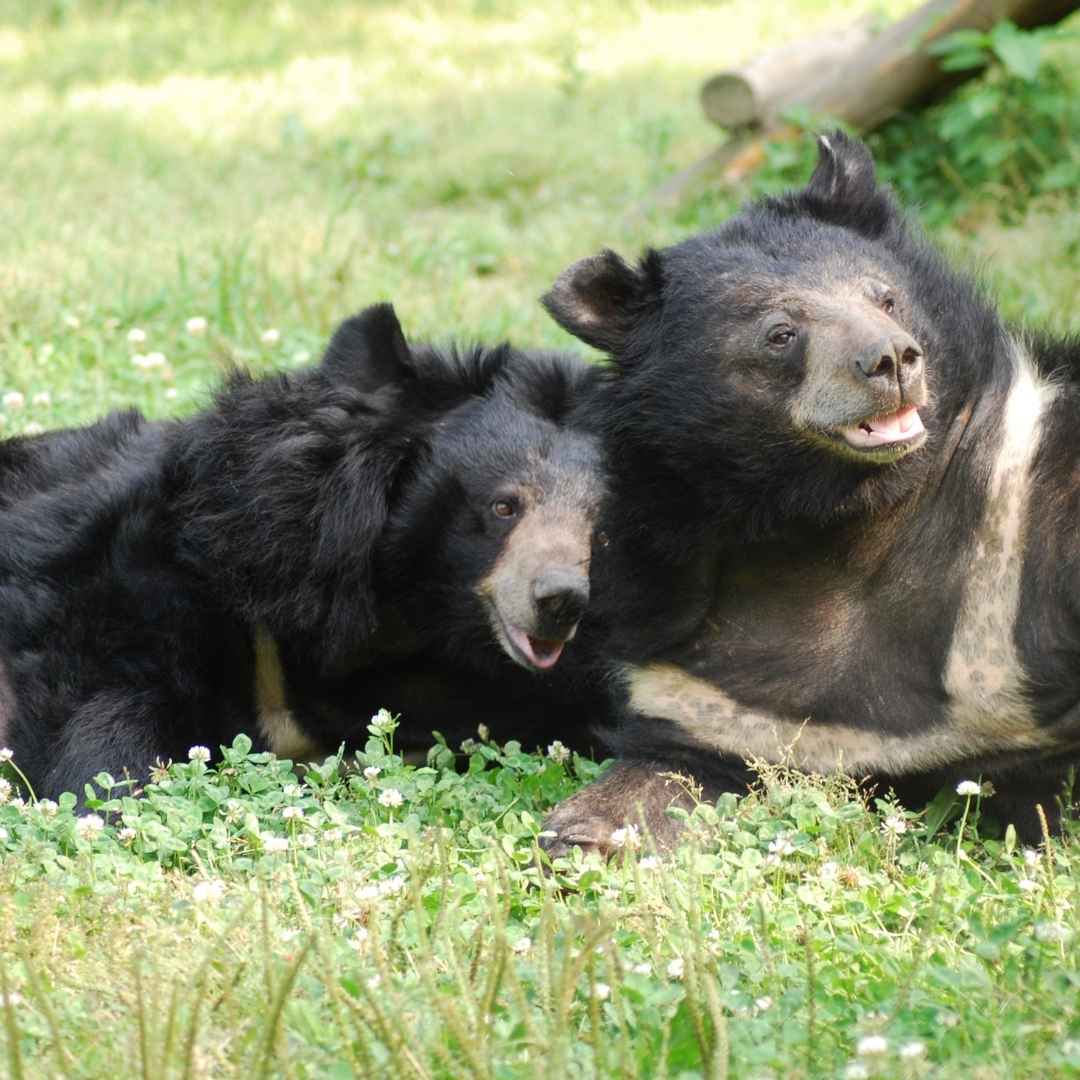
Moon bears are emotionally complex, intelligent, curious animals with distinct personalities. Meet the moon bears rescued by Animals Asia to see how lives can be transformed by kindness and care.
For bears rescued from the bile trade, the journey to sanctuary is about more than removing them from a cage. It’s about giving them back the opportunity to experience the world in a way that matters to them.
How can you help?
Every one of us can play a part in creating a world where animals are treated with the compassion and respect their sentience deserves.
- Learn more – explore the key issues behind the work of Animals Asia in sentience and welfare.
- Make compassionate choices – consider the welfare of animals when choosing products and services.
- Use your voice – sign our letter to end bear bile farming
- Support animal welfare organisations – donate to support charities like Animals Asia in their mission to end bear bile farming.
Help us put an end to animal cruelty
Animals are being captured and exploited every day. Animals Asia has helped thousands, but there is always another animal in need of our help. Please donate today.
Donate now