
English
Bear bile farming in Vietnam

Tuoi Tre newspaper report

In early September, Tuoi Tre newspaper published an extraordinary three-part exposé of the lucrative but flagrantly illegal business of ‘bear bile farming’ near Ha Long City. This was followed by its publication on VietNamNet Bridge, the first on-line English language newspaper in Vietnam: 24/7/365, VietNamNet Bridge brings its readers breaking news an perceptive reports on Vietnam’s social and cultural panorama.

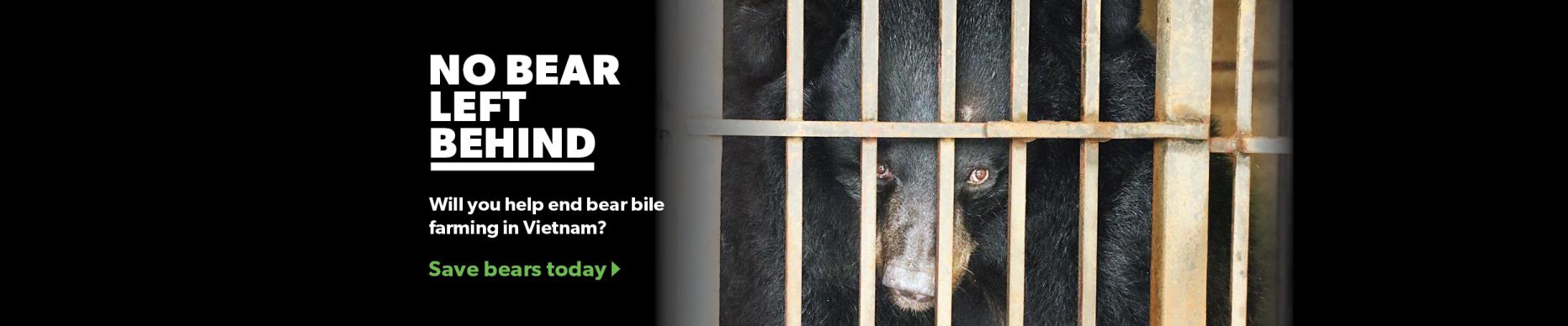
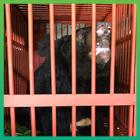
In Ha Long, more than 300 bears are currently “preserved” in such small cages. - Photo: NG.TRIEU.
A Korean broker at a bear farm in Ha Long - Photo: M.HA
The wooden room in Hạ Long Bears Farm where visitors view the bear bile extraction - Photo: M.HA
The following is a translation of the original Tuoi Tre newspaper report, as published by VietNamNet Bridge.

PART I - Wednesday, 9 September, 2009

Infiltration of the bear farm "group" in Ha Long.

Despite the banner of tourism, bear farms in Ha Long city (Quang Ninh province) are all barricaded secret places; no visitor escapes the probing gaze, outright and stone-cold rejection from security guards. What are they actually doing in there? The answer is not easy to get unless you're in a group of foreign visitors booked in advance.

The bears' fate behind the mystery gate.
8:00am, 28 August: A flame-red 46-seated bus with license plate of 30S-3… following national route No.18 from Bai Chay to Uong Bi town, turned into a road which leads to “Ha Long farm” – a well-known bear farm in Don Dien area (Ha Khau precinct, Ha Long city). Security guards immediately pushed open the heavy metal gate, let the bus in, then quickly closed it again.

Identify tourists

Following the bus carrying tourists, we ambled in as backpackers. Pointing at the “hotel” sign near the gate to ask for a room, we immediately received a blank refusal hand gesture and unfriendly look from the security guy: “under maintenance, no room”.

In fact, being warned by volunteers from wild animal protection organizations, we were not surprised at this. Earlier, in May 2009, Mr Nguyen Dinh Xuan, National Assembly delegate, was able to pay a sudden visit to this bear farm thanks to his brand new bus.

The security guard thought they were the farm's regular guests so he opened the gate wide. When he realized his blunder, it was too late – Mr Xuan and his companions had got off the bus, introduced themselves and walked straight inside just before another 35-seater bus from ABC Joint Venture Company Limited bearing license plate of 29LD-3…, filled with Korean tourists, arrived.

It turned out that it was about time they were scheduled to receive the bus load of Korean tourists, however, Mr Xuan’s bus, which was the same size, arrived some minutes earlier and was mistaken by the guard.

We were not so lucky and had to find a place nearby to observe, making a time-table of tourists visiting Ha Long farm. Through our camera, after more than one hour, the bright red bus was spotted, still parked in the yard. Again at about 9:30am the metal gate was opened for a white Daewoo 4-seater with license number of 30F-6… to drive in.

This car is no stranger to us as we had seen it before carrying a Korean whose job is to bring tourists to bear farms in Ha Long.

9:45am: another lilac 46-seated ABC International Joint Venture Company bus, license number 29LD-2…, carried more Koreans in.

Also on 28 August, at another bear farm located along national route No.18, near Dai Yen Bridge, Cau Trang Village, Dai Yen commune (Ha Long city), we noted two groups of Korean tourists, each of which stopped by for almost two hours.

This bear farm belongs to Dat Viet Travel Ltd Company and because of its earlier sign displaying five bears, this farm is called “five bears” farm by local people to differentiate from the nearby “one bear” farm, named Ha Long Bears by showing a bear on its sign. After the unexpected visit of Mr Nguyen Dinh Xuan, these signs were taken down, however, they are actually not necessary as visitors still come to these farms day by day. Each farm can receive four or five buses per day.

After Mr Xuan's visit, the process of accepting visitors was further tightened in bear farms in Ha Long. All visits must be directly admitted by farm owners or led by only Korean brokers. Security guards with frigid faces stare from a far distance and only open the gate once they have ensured that the vehicle is the correct one.

Watch bile extraction directly

Through "shape-shifting" and stressful professional methods, we finally managed to enter some bear farms. Once inside the farm, the Vietnamese tour guide is temporary off-duty, passing the role of guiding and introducing to the broker. Even the farm staff, and farm manager walked aside and kept their eyes on the visitors.

All conversations between the broker and visitors from beginning to end were in Korean or Chinese. Typical biological features (age, weight, height…) of bears on sign-boards put up in the farm were all written in Korean.

We were taken on a tour around the bear farm by the broker. The so-called "tour" is in fact just watching huge moon bears kept in tiny cages lined up closely.

At Ha Long farm, Ha Long Bears, Dat Viet, Plus…with the scale of 50-70 bears per farm, bear watching tours were conducted in just 15-20 minutes as the broker gave only a brief introduction and we also realized that most visitors did not seem patient enough to behold the bears panting heavily and growling savagely behind the bars. During the tour, the broker took his chance to introduce the effects of bear bile in medical treatment, health improvement, and in the end he brought us visitors to the un-missable practice: viewing bile extraction directly.

Due to a disagreeable reaction from some visitors against seeing bears struggling and being knocked down with anesthetics, some farms avoided anaesthetizing bears in front of visitors unless requested. Instead, when visitors arrived, the farm staff would prepare a bear and while visitors were on the tour around the cage area, they started the anaesthesia process.

At the very moment while bile was being extracted, the gate was thoroughly secured: no exit or entrance allowed. In farms like Dat Viet, Plus, Ha Long Bears, the extraction process was discreetly performed in a wooden room, where we could see ultrasound machines (human-use types), electrical extractors, instruments for bile extraction (cylinders, vials, tin foils packages …) and Visa card reader − all readily available.

We were settled down on one side of the room. Those machines were placed on a table on the other side and right at the door was the "execution stage" to perform bile extraction. Before our eyes, a poor bear was wheeled out on a trolley, anaesthetised, facing upward with all four limbs tightly roped as if he was about to be dismembered by four horses.

A man in a white shirt deliberately carried out each step after another such as smearing gel, rubbing the ultrasound scanner across the bear’s abdomen while watching the monitor to locate the gall bladder. A needle was inserted into the bear’s gall bladder and connected to the extractor via a rubber tube.

At the same time, the broker kept explaining incessantly to us every move of the operator in Korean. In a little while, when the amount of bile taken out reached 120cc – 150cc, the process ended and the bear, still laying motionless, was wheeled back to the cage.

Right after the show, the farm’s staff, mostly female, divided bile into small vials of 1cc, 5cc, 10cc or packed equivalent amounts in tin foils under the supervision of the manager.

Bile was now extracted and anyone who had no duty was asked to leave. Then, in that wooden room, there were only visitors, the farm’s cashier and the broker. Even without witness, everyone would understand that the people remained inside were completing the final step of the “bear farm tour”: trading bear bile.

NGUYỄN TRIỀU

Pursuant to Decree No 32/2006/ND-CP, Moon Bears (as well as Sun Bear − Urus Malayanus) are wild, rare animals of group 1B (group 1A includes wild, rare plants) of which exploits for commercial purposes are strictly forbidden.

As stipulated in Item No.6 of this Decree: wild animals of group I shall only be used for purposes of scientific studies (including the creation of original genetic sources for breeding, artificial tree planting), international cooperation. The exploitation of wild animals and plants in group I must not negatively affect the conservation of these species in the wild and must have a plan approved by the Minister of Agriculture and Rural Development.

Pursuant to the Convention on International Trade in Endangered Spices (CITES), export of any specimens of wild plants and animals requires licenses of relevant authorities of that country. In Vietnam, according to current regulation, specimens and products from rare, endangered wild animals of group I are on the list of forbidden trading items.

Complied by N.TRIỀU


/home/www/public_html/admin/T3tmp/BeforeHTML03810719109920100902132259.php