
English
10 more bears free after dramatic rescue

20 Chinese provinces bear-farm free with closure of Shandong's last bile farm

20 out of 31 China provinces are now bear-farm free.
Animals Asia rescued 10 more bears from Shandong Province's last farm on 19 April, bringing to 20 the number of provinces now bear-farm free, and committed to remaining that way. With the cooperation of local officials, our latest rescue took us to Weihai, Shandong Province, China.

Arrival

Led by Jill Robinson, the veterinary team – two vets and two vet nurses – a six-man team of bear workers, support staff and drivers arrived in the city of Weng Deng the night before the rescue to start preparations.

The rescue began early next morning – setting out at 8am for the short drive out of town to the farm/commercial enterprise in Weihai. Arriving on site, a collective gasp rose from the rescue team – there, standing proudly inside the gate was a large bear statue, at first glimpse bearing an uncanny resemblance to our own Andrew statue that presides over our China Moon Bear Rescue Centre. Ironically, the first sight of this bear was through the metal bars of a surrounding fence. Closer inspection showed the bear advertising the name of the bile product no doubt responsible for the deaths of many, many bears over the years: “Fei Ursi Health Liquo” (roughly translated as “big bear health tonic”).

Surrounding the statue on three sides was what remained of a once-prosperous bile-selling enterprise – offices and rooms set up for business on either side, now uncared for, shabby and peeling, with faded posters of the bile products and a few discarded cartons used to sell bile in bulk. Joining the two sides was the “bear house”. Behind double-metal doors plastered with red Chinese New Year banners proclaiming health, prosperity and peace, was the tragic truth of the bile industry.


The bear house

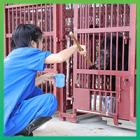
On first look behind these doors, eyes widened in awe at the nearest cage – inside, a massive 280kg brown bear, staring sadly back. Directly to the left, five more cages of various sizes holding five moon bears and further down at the end, another, smaller brown bear and a moon bear. To the right, two more brown bears. Our team had expected this mix of bear species but were shocked to the core by the rusting, dangerous cages, the bears staring out with dull eyes, swaying back and forth, anxious and in pain.

The team quickly assessed the situation – how to move the bears, who to prioritise for health-checks, how dangerous were the cages. The stench of filth, waste and decay was palpable. And then there was the cold – as the day gradually warmed up outside, the temperature remained frigid in this bear prison.

On either side of the bears – more cages, now empty, with several of that most vicious of devices stacked high on top – the brutal metal jackets, sad, depressing evidence of the degree of torment these bears have endured. The appalling effects of these jackets became all too clear as the health-checks progressed later in the day, and the team knew that many of the bears had worn these heavy contraptions for many years and had had them removed by the farmer just hours before our arrival.

The empty cages stood as stark monuments to bears past and reminded the team of those bears they could not save.


The production line

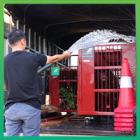
An examination by the vet and project team leaders of the bear house revealed that the cages, lined up side by side, opened from the left-hand side only. This meant there was no option but to start at the end and work along the row, releasing each bear in turn, as moving ancient, rusting cages with bears inside was too great a risk. Despite the vet team being anxious to get a close look at several bears showing severe signs of distress and pain there was no opportunity to prioritise these bears for first care.

With the removal plan in place, the hazards were assessed – cage bars dangerously far apart allowing the bears to reach out and swipe or grab easily, a drainage channel running along underneath all the cages, a filthy, slippery floor and incredibly, at one end of the building, a ceiling about to come crashing down. Above the last cage holding a misshapen brown bear obviously in pain (later nicknamed “Oliver”), was a drooping ceiling, already gaping open and with a network of cracks extending across the ceiling and down the shed. This had been propped up with supports balanced on top of Oliver's cage and would need careful monitoring throughout the day.

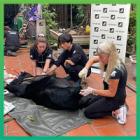
Ready to go, Veterinary Director Heather gave a final briefing to all and the rescue began with the first bear – a male moon bear – distracted by vet nurse Wendy with a tempting treat and anaesthetised successfully by vet Monica with a jab-stick. This procedure caused some anxious moments for his neighbour, a small brown bear, and shivered up the line to affect the others – something was happening and from the bears’ experience with humans, this was never good.


10 more bears free after dramatic rescue – Part I

10 more bears free after dramatic rescue – Part II

Emergency surgery

Back on the road

Metal jackets

Read Jill's rescue blog


/home/www/public_html/admin/T3tmp/BeforeHTML03810719109520100908095524.php