


There is little educational value for people seeing animals that are not housed in conditions resembling their natural habitat. Teaching animals to perform inappropriate tricks does nothing to educate the public or foster respect for animals. There is no evidence to indicate that training and performance make up for the lack of stimulation provided by impoverished living accommodation. Experts attest that exhibiting such animals in fear and stress leads to a misrepresentation of the species in the public eye and teaches people nothing except the animals' size, shape and colour. Loud music used during animal performances can also cause stress and severe welfare problems.
The physical conditions for animals used in performances are appalling. The tigers and bears have been de-toothed – a practice that causes severe and chronic pain owing to the exposure of the pulp and nerve endings, and leads to potential infection of the surrounding area, including gums, jawbone and nasal region. The tigers and bears also appear to have been de-clawed; a practice that causes significant pain and leads to the animals’ inability to perform natural behaviour.
The showmen in the animal performances use fear to control the animals and force them to carry out humiliating tricks. This only demonstrates a need to dominate other species rather than a respect for the behavioural, ecological and conservation needs of these individuals and the species they represent. No animal should suffer in this way for the sake of public entertainment – especially when it results in a compromise to the health or welfare of the animal concerned. Animal performances portray the animal to the public in such a way which is humiliating and contrary to the principles of promoting empathy and respect.
A large number of breeding tigers show signs of physical neglect and exhibit serious stereotypic pacing due to the lack of enrichment and inadequate enclosure sizes.
The exhibition of white tigers shows a lack of knowledge and respect for tigers as a species. Due to the recessive nature of the gene that produces the white variety, inbreeding is one of the most common ways to produce white tiger offspring ie, father and daughter. This severe inbreeding can lead to a variety of health problems, including immune deficiencies, scoliosis, cleft palates, mental impairments and ultimately animals dying at a younger age. The white tiger gene is a deleterious recessive gene, which is disadvantageous to the survival of animals in the wild.
The continued sale of tiger bone wine, bear bile wine, vials of bear bile, and lizard wine causes further suffering of animals to provide these products. Bear farming is a completely inhumane practice, which causes severe welfare problems and the death of many bears from infections and tumours brought on by the continual abuse of their bodies to supply and obtain the bile.
The trade in tiger products is prohibited internationally. The limited trade allowed within China continues to encourage and provide a platform for the illegal market in tiger bone products throughout China. This leads to the further demise of the wild-tiger population and further suffering for tigers on tiger farms. The current international ban on tiger products has been effective in reducing the demand for tiger products and therefore these bans should be reinforced, not undermined.
Zoos and safari parks are ideally placed to foster compassion for animals and raise awareness and understanding of the welfare and conservation needs of individual animals and species. Xiongsen Bear & Tiger Mountain Village makes no attempt to provide this knowledge and to educate its visitors for the benefit of welfare and conservation.
Animals Asia recommendations
- Immediately end the trade in bear bile and tiger bone wine.
- Immediately end the farming of bears for their bile and the breeding of tigers and lions for tiger bone wine.
- Inform staff about current CITES laws with regards the trade in endangered species products.
- Immediately end the use of animals in performances and move towards developing human acrobatic displays to entertain visitors.
- Immediately end the practice of de-toothing and de-clawing tigers and bears.
Provide larger enclosures and enrichment tools for tigers housed within the park in order to allow them to exhibit more naturalistic behaviours.
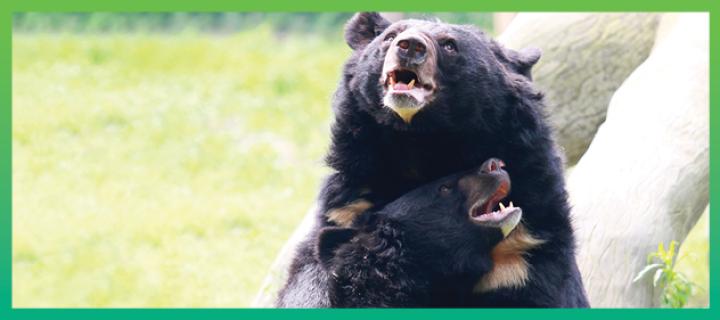
- Adapt current bear enclosures and provide additional enrichment, giving the bears an environment suitable for their natural behaviours and allowing the bears to display more natural behaviour.
- Meet with Animals Asia staff to discuss the management and husbandry of the bears, and seek advice on veterinary treatment, appropriate housing, environmental enrichment, and improved food and nutrition.
Ultimately, Animals Asia recommends this facility is phased out as it is unable to provide the appropriate environments to meet the behavioral and ecological needs of such large carnivores.
Download a full copy of the Investigation Report here.
Others:
|