


|
|
|
| China: Bear bile extraction techniques |
Since bear bile farming was introduced in the early 1980s, several shocking techniques for extracting bile have emerged and evolved. All of them, which typically involve the extraction of 50-100ml of bile, are extremely painful.
1. Latex catheter
A narrow rubber pipe was embedded under the skin and surgically attached to the gall bladder. The farmer extracted the bile through the rubber pipe which exited the skin at the top of the bear's thigh.
Animals Asia has received a number of bears with these "old-fashioned" latex catheters and as this technique was phased out in the mid-80s, we believe that these bears must have been caged for about 20 years.
The main "problem" with the latex catheter technique was that it became easily clogged with bile granules and other foreign matter and was therefore not an effective extraction method. Subsequent modification to this technique saw the introduction of archaic metal jackets.
2. Metal jacket
A rubber pipe was connected to a fluid bag inside a metal box, which was attached to a metal jacket that held the box in place under the bear's abdomen. The bile drained through the rubber pipe into the protected fluid bag and was emptied every two weeks or so by the farmer.
As we discovered from a rescue of two farmed bears in Tianjin in January 2004, bears are still being subjected to this horrific technique; in addition to the obvious infection and pain, the metal jackets which weigh in excess of 10 kilos also cause massive hair loss and painful irritation over the bears' bodies.
This method of extraction was also very dangerous for the farmer, who needed to crawl under the cage for a period of time to unlock the metal box and drain the bile out of the bag. As a result, this method soon gave way to the metal catheter.
3. Metal catheter
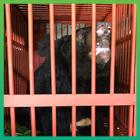
Varying in length from 5 to 7.5 inches, a catheter was surgically implanted into the bears' gall bladder, allowing the farmers to milk the bears each day. During milking, the bears were enticed to lie flat on the bottom of the cage in order to feed from a low tray, thereby allowing the farmer easy access to the bear's abdomen and catheter.
Often, a metal "crush" (a metal grille) was lowered on top of the bears to force them to remain in this flat position until the farmer was finished. In many cases, the farmer never bothered to raise the crush.
We have been horrified to receive many bears in cages with crushes rusted permanently into the lowered position, pinning the bears flat to the bottom of the cage for years on end.
4. Free-dripping" technique
In recent years, Chinese bear farmers have introduced a new and so-called humane, "free-dripping" method of bile extraction. This method uses no catheter, but sees a permanent hole, or fistula, cruelly carved into the bear's abdomen and gall bladder, from which bile drips freely out.
During this type of bile extraction, the bears undergo the same treatment as those subjected to the metal catheter method of extraction they are tempted by food or honey water to lie on the bottom of the cage, while the farmer forces an unhygienic tube into the gall bladder; this breaks the membrane that has grown over the hole, and allows bile to flow directly into a bowl placed beneath.
The damage caused by bile leaking back into the abdomen, together with infection from the permanently open hole is as bad, if not worse, than the older style methods and causes a high mortality rate on the farms.
Unbelievably our veterinary surgeons have discovered during surgical assessments that several of the rescued bears have been victims of every single method of bile extraction.
4. "Fake-free dripping" technique
In January 2005, the Animals Asia's veterinary team discovered that a new technique of bile extraction was being tested out on the bears: "fake free-dripping".
Rather than a fistula or "hole" in the abdomen, the farmers are now inserting a permanent, clear perspex catheter into the fistula, which is almost impossible to see unless the abdomen is shaved and examined close-up.
This new technique is against China's current regulations on bear farming. |
 |
 |
| A latex catheter runs from the bear's gall bladder to the top of his thigh. |
| |
 |
| A metal jacket secures a latex catheter and bile collection bag in place for milking. |
| |
 |
| Steel catheters varying in length from 5-7.5cm are implanted in the abdomen. |
| |
 |
| Steel catheters that were removed from our rescued bears. Some were rusting away. |
| |
 |
| The new "humane" free-drip technique involves a permanently open wound. |
| |
 |
| The "Fake-free drip" technique sees a Perspex catheter hidden in a gall bladder. |
| |
|
|
|